
MOA Lightex Ultra 2000
The MOA Lightex Ultra 2000 replaces frustrating GPS setups with reliable 360-degree LIDAR, featuring an innovative side-shifting blade that delivers exceptionally tight edge trims.
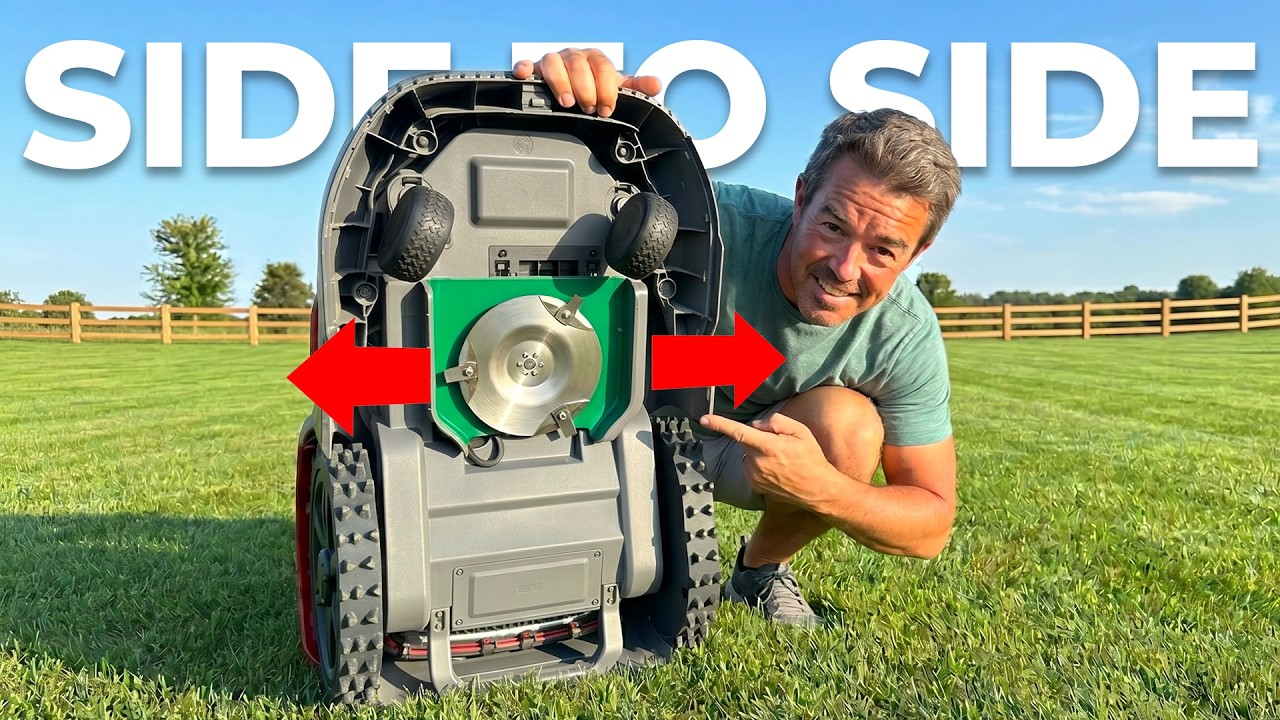
- Internal blade wheel physically shifts left to right, providing an ultra-close cut that gets within two inches of borders and fences.
- Bypasses standard RTK and GPS requirements entirely in favor of 360-degree LIDAR and AI cameras, eliminating weak signals near tall structures.
- Mobile app makes it incredibly simple to cut custom shapes like hearts, straight lines, or checkerboard patterns directly into the lawn.
- Easily powered up residential hills reaching a 45 percent grade during testing before activating safety sensors.
- Intelligently maneuvers around tricky yard objects like trees by repeatedly approaching, backing off, and turning to create a clean perimeter.
- The auto-mapping software struggled to hug boundaries consistently during testing, necessitating a manual remote-control drive to lock in precise borders.
- AI obstacle avoidance completely failed the fake dog poop test, carelessly running over the mess in short, medium, and tall grass.
- Bulky chassis prevents the unit from wiggling into particularly tight inner corners and sharp landscaping peaks.
- Failed to avoid a tennis ball on its initial pass despite the app confirming it registered the object as a ball with 90 percent certainty.
- Navigation System
- 360 LIDAR and AI Vision Cameras
- Cutting Width
- 8 in
- Cutting Height
- 1.2 in to 3.9 in
- Runtime
- 70 to 90 minutes per charge
- Incline Limit
- 45% grade
- Daily Capacity
- 1/3 acre
- Gap Clearance
- 2 ft
MOA Lightex Ultra 2000
Amazon · $1040 · As an affiliate we may earn from qualifying purchases.
Overview
Robotic lawn care is rapidly advancing, but one persistent complaint often overshadows the convenience: robots historically leave wide, unsightly strips of uncut grass along fences and sidewalks. The MOA Lightex Ultra 2000 aims to solve that problem entirely. By rethinking how the cutting deck operates, this high-end automatic mower provides an incredibly thorough cut right up to the boundary edge.
Unboxing the unit reveals a comprehensive starter kit. Alongside the mower and its charging dock, the package includes an easy start guide, an owner's manual, a cleaning brush, mounting screws, extra blades, a screwdriver, a cleaning cloth, and the main charging cable. Setup is wonderfully straightforward: simply lay out the charging pad, secure the dock, plug it in, and place the unit on its home base.
What makes this model truly notable is its departure from traditional navigation. Unlike the bulk of battery-powered mowers that rely heavily on satellite GPS and RTK antennas to maintain a perimeter, the Lightex Ultra 2000 operates heavily on 360-degree LIDAR and onboard AI vision cameras. This means that losing a satellite signal behind a towering fence, a parked car, or a tall two-story house is no longer an issue. Everything the robot needs to construct a digital blueprint of your property is housed completely inside the chassis.
Real-World Performance
Navigating a yard smoothly requires solid digital boundaries. During testing, the auto-mapping feature showed promise but ultimately required human intervention. When tasked to automatically map across the boundary, the machine started strong but eventually panicked at a corner and drifted directly into the middle of the lawn. To its credit, the companion application issued a prompt stating that successful auto-mapping requires clear skies and optimal lighting. To get a truly precise cut, switching to manual mode was necessary. Using the smartphone app like a remote control, driving the mower right along the border of the bushes and overlapping the sidewalk by a few inches yielded a flawless map.
Once the map was finalized, the edging test delivered spectacular results. The edge routine forces the machine to complete two loops. The first pass takes a slightly wider path, but on the second pass, the system trims 2 to 3 inches closer to the boundary. Walking down a concrete sidewalk path, the cutting mechanism accurately hugged the edge, staying a mere 2 inches away from the concrete boundary line without dropping a wheel.
Terrain testing pushed the system to its physical limits. The machine comfortably hopped over a standard 1.5-inch step up from grass to gravel. When confronted with a larger 3-inch rock border surrounding an elevated flower bed, the machine did get stuck and required a manual physical boost to keep going. However, it proved immensely powerful on inclines, actively climbing hills up to a steep 45 percent grade before internal tip-sensors paused the motor for safety.
Navigating around a mature tree highlighted the software's impressive logic. Rather than bumping blindly, the unit repeatedly approached the trunk, backed off slightly, and turned, meticulously mowing all angles until the boundary was spotless. AI obstacle avoidance testing was more of a mixed bag. Set to a 1.5-inch vertical detection height and a 4-inch scanning distance, the AI completely ignored a tennis ball on loop one, bumped and abandoned a baseball bat, but successfully recognized and avoided a shoe. More importantly, it dragged fake dog poop across short, medium, and tall grass—meaning you will absolutely need to clean up after your pet before running a session.
Design & Build Quality
The exterior build of the Lightex Ultra 2000 is rugged and clearly built for long-term outdoor exposure. The wheels resemble aggressively spiky tires, a design choice that affords exceptional grip over muddy patches, loose gravel pathways, and thick wet turf. It is noticeably heavier and larger than entry-level machines, which directly contributes to its inability to sweep tightly into jagged aesthetic landscaping peaks or narrow fence corners.
Despite its larger footprint, portability was clearly kept in mind. MOA included a sturdy, integrated lifting handle built directly into the rear chassis, making relocating the unit from a front yard to a back yard remarkably hassle-free for a heavy device.
The top cover features an attractive reflective surface that flips open to reveal an internal LCD screen and a manual dial interface. This is vital for owners who step outside and want to make instant adjustments without pulling their phone out of their pocket. Tucked neatly near the back is an exposed rain sensor. In the event of a sudden downpour, the sensor triggers immediately, shutting down the mower blades, dispatching a digital notification, and routing the machine straight back to the covered dock.
Key Features
The marquee feature of this unit is undeniably the sliding blade mechanism. When owners activate the Ultra Trim function inside the app, the internal cutting wheel physically shifts side-to-side, horizontally extending the cutting path to achieve a virtually flush trim along fences. The unit simultaneously spits the cut clippings smoothly out of the side of the housing.
App-based customization is remarkably deep. Users dictate precisely how the grass is maintained, adjusting the cutting height anywhere from a putting-green-low 1.2 inches all the way to a thick 3.9 inches. Because the physical cutting swath spans nearly 8 inches wide, it effortlessly clear-cuts a third of an acre per day on a single charge. Users can assign specific zones with varied heights, and even tell the machine to cut in standard lines, checkerboard cross-hatches, or elaborate custom shapes like a giant heart.
Smart security is handled exceptionally well. If the unit is manually picked up by a stranger, it initiates a blaring voice alarm stating 'Robot is lifted, please check.' An emergency stop button on the top frame locks the machine entirely until a secret PIN code is typed into the hidden LCD screen. Advanced tracking is baked right in, boasting 4G tracking connectivity, active Google Maps syncing, and direct Air Tag compatibility. It also features a front-facing first-person view camera to check on the yard remotely, complete with two-way audio to yell at encroaching neighborhood pests.
Who It's For
This mower is custom-built for tech-loving homeowners who have complex yards full of tall trees or structures that traditionally block RTK satellite signals. It is an ideal purchase for anyone looking to largely eliminate weekend perimeter weed-whacking, thanks to moving blades that successfully cut within two inches of physical walls.
Who Should Skip It
Homeowners with dogs who cannot commit to picking up pet waste before every mow should look elsewhere, as the blades will aggressively mulch and spread the mess across the lawn. Additionally, buyers with incredibly jagged, intricate inner yard corners should avoid this model, as its bulky frame cannot squeeze into overly sharp peaks.
How It Stacks Up
When placed alongside other mowers in this premium price tier, the sheer volume of integrated tech makes it stand out. Most competing top-tier lawn robots require owners to mount an RTK tower to the roof of their home to bounce GPS signals around the property. By relying strictly on 360-degree LIDAR and AI cameras, the Lightex Ultra 2000 bypasses that complicated physical installation entirely. Furthermore, the ability for the cutting deck to actively slide left and right gives it a massive trimming edge over fixed-deck rivals that chronically leave four-inch strips of wild grass against retaining walls.
Final Verdict
The MOA Lightex Ultra 2000 is a brilliant piece of automated yard technology that legitimately pushes the robotic mower segment forward. While the auto-mapping feature is somewhat inconsistent and requires manual smartphone driving to perfect, the ultimate reward is a perfectly aligned perimeter cut. Between the side-shifting edges, the heavy-duty spiky tires, and a navigation system that laughs at signal dropouts, this unit is well equipped to take over your heaviest landscaping chores.
How close to the edge does the MOA Lightex Ultra 2000 cut?
When the Ultra Trim feature is activated in the app, the internal blade physically slides from side to side, getting within two inches of fences and sidewalks.
Does the MOA Lightex Ultra 2000 need a GPS signal to map my yard?
No. It bypasses conventional GPS and RTK tower setups entirely, relying strictly on an onboard 360-degree LIDAR system and AI vision cameras to map the property.
Will the MOA Lightex Ultra 2000 mow over dog poop?
Yes. While its live pet detection will stop the mower if it sees a moving animal, testing showed it completely failed to avoid artificial canine waste in short, medium, and tall grass.
Can the MOA Lightex Ultra 2000 handle steep hills?
Yes, it is equipped to conquer steep residential hills up to a 45 percent grade. If the hill exceeds that slope, an internal sensor automatically shuts the mower down for safety.
How large of a yard can the MOA Lightex Ultra 2000 cut in one day?
It is capable of cutting roughly a third of an acre per day. If it runs out of its 70 to 90-minute battery mid-job, it automatically returns to its dock to charge before heading out to resume cutting.