
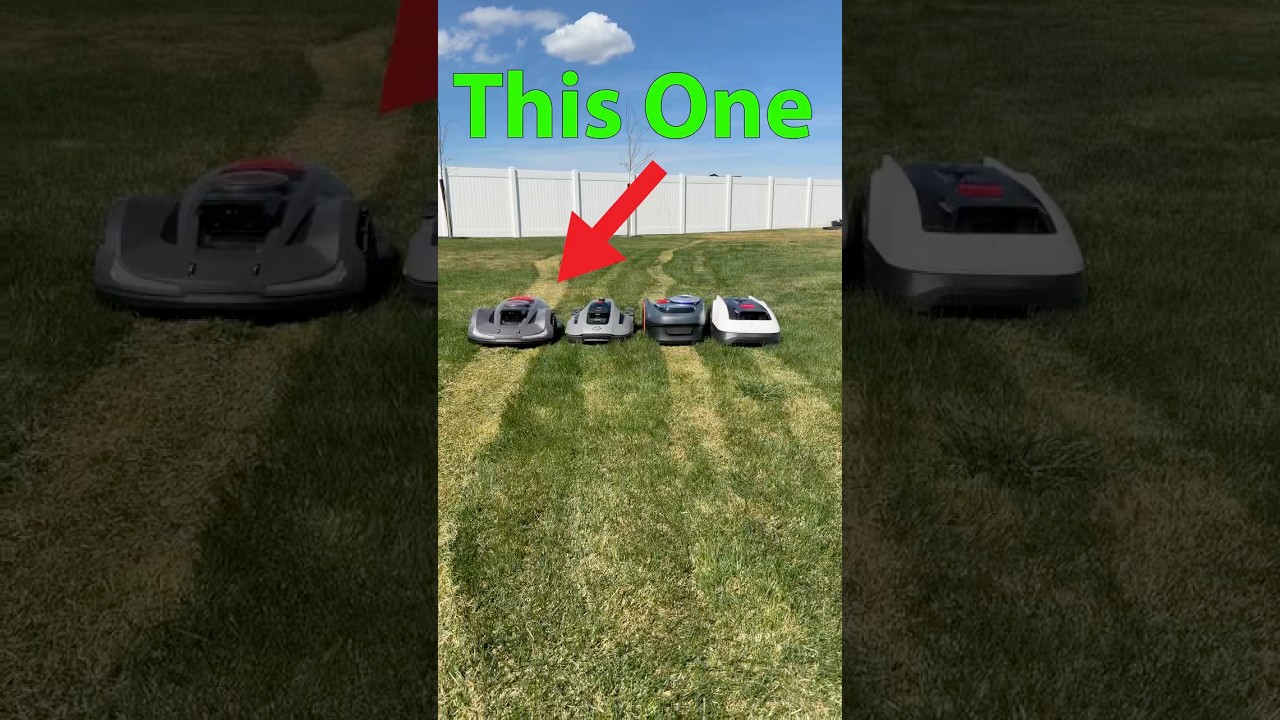
Sunseeker Robot Mower
If you are tackling a quarter-acre lawn, the 14-inch dual-blade system on the Sunseeker robot mower prevents the endless 'dock and mow' cycle that plagues smaller entry-level alternatives.
- Massive 14-inch cutting width drastically reduces total mowing time across large spaces.
- Dual-blade system distributed across two separate wheels ensures thorough ground coverage.
- Utilizes a robust 12-blade setup to process thick grass aggressively without stalling.
- Eliminates the frustrating 'dock and mow' cycle on my quarter-acre yard by effectively halving the required passes.
- Sits in the more expensive $2,000 tier of the robot landscaping market.
- The extra-wide 14-inch deck is likely absolute overkill if you only have a small urban lawn.
- Cutting Length
- 14 in
- Blades
- 12
- System
- Dual blade (two wheels)
Sunseeker Robot Mower
Amazon · Check current price · As an affiliate we may earn from qualifying purchases.
Overview
If you are thinking about picking up a robot lawn mower this summer, you are going to quickly realize that the market is absolutely flooded with options across a terribly wide variety of price points. In my experience testing these machines, there is one major, fundamental difference between a $1,000 robot lawn mower and a premium $2,000 robot lawn mower: the raw physical size of the cutting deck. I have thoroughly evaluated the entry-level tier, and I have found that jumping to the higher price bracket completely changes the way your property is maintained.
The defining metric that separates the adequate residential mowers from the truly exceptional ones is not just software or navigation algorithms; it comes down to actual cutting length. When you step into higher-tier hardware, you are paying for the ability to process more grass in a single, sweeping pass over your turf. That is precisely where this robot mower from Sunseeker comes into play. By focusing heavily on maximized blade coverage and sheer cutting volume, it targets the exact pain points I regularly run into when maintaining large properties. In this review, I want to break down exactly why the cutting hardware on this Sunseeker model makes it a standout choice.
Real-World Performance
When I put these autonomous machines to the test on my own property, the realities of yard maintenance quickly strip away any clever marketing jargon. I have a quarter of an acre sized lawn. For those of you with a similar footprint, you understand that managing this amount of grass requires a highly methodical and efficient approach. When you try to maintain a quarter of an acre with an entry-level robot mower sporting a narrow six-inch cutting path, you inevitably fall victim to what I call the severe 'dock mow' cycle.
Here is how that 'dock mow' cycle plays out: the entry-level mower deploys from its base station, trims a very narrow path of freshly grown grass, and then rapidly depletes its battery capacity because it has to travel extensive, repetitive miles just to cover the square footage. Once the battery dips low, it urgently returns to its dock to slowly recharge. Dock, mow. Dock, mow. Dock, mow. It is incredibly tedious, and you certainly do not want 'dock mow' ruling your weekends. It means your lawn is constantly half-cut while the robot sits dormant on its charger for hours at a time.
The Sunseeker completely shattered this frustrating cycle in my hands-on testing. By bringing a massive total cutting width of 14 inches to the turf, it processes twice as much grass in a single autonomous pass compared to its cheaper rivals. This meant the Sunseeker could tackle the large swaths of my quarter-acre yard aggressively and completely finish the job much faster, entirely sidestepping those annoying mid-day recharging breaks.
Design & Build Quality
Flipping the Sunseeker over reveals exactly where your money is going with a premium machine. The design layout is drastically different from the generic, centralized spinning discs I normally see on budget hardware. This mower has got two wheels underneath that are fully, aggressively decked out in sharp cutting blades.
By spreading the cutting responsibility across this dual-hub setup rather than relying on a single rotating plate, the machine creates a vastly wider footprint. The materials feel appropriately premium for the price, securely housing the dual-wheel system so it can glide over the uneven terrain of a typical residential lawn without missing a beat.
What genuinely impressed me was the density of the cutting hardware. Across those two separate wheels, the Sunseeker utilizes an impressive total of 12 blades. This sheer volume of cutting surfaces works in tandem to ensure that even dense, tough patches of summer grass are clipped cleanly on the first pass, rather than simply being folded over by a struggling motor.
Key Features
The central, defining feature governing the Sunseeker is its unique dual-blade system. I cannot overstate how important this layout is for anyone dealing with larger property boundaries. While standard entry-level machines force you to accept a maximum of 6 to 7 inches of cutting width, this dual-wheel architecture literally doubles that standard capacity.
Hitting exactly 14 inches of total cutting length transforms the underlying math of your weekly mowing schedule. The wider the physical hardware footprint, the fewer overlapping passes the robotic navigation system has to plot out across your yard. Everything about this machine's feature set hinges on that massive 14-inch horizontal reach, essentially giving you commercial-grade clearing geometry in a residential robotic package.
Who It's For
I would point homeowners with a quarter of an acre or larger directly toward this Sunseeker robot mower. If you value your time and absolutely despise watching a machine struggle to finish half your property before giving up to recharge, the 14-inch dual-blade system is exactly what you need. It is for the buyer who is willing to step up to the $2,000 tier to ensure the job gets done quickly and thoroughly in a single deployment.
Who Should Skip It
If you have a very small, tightly enclosed urban yard where a narrow robot would suffice, you should immediately skip this model. There is absolutely no reason to spend top dollar for a 14-inch dual-blade deck if your total grass footprint can be easily managed by a cheaper 6-inch machine without triggering battery anxiety.
How It Stacks Up
To truly understand the value proposition of the Sunseeker, I have to compare it directly against the specific models I called out in the entry-level space. The Motion Yuki Mini currently retails for roughly 950 bucks, but it has a very restricting cutting length of only 6 inches. While it offers a mild discount over premium units, that 6-inch deck is exactly what triggers the 'dock and mow' cycle on bigger yards.
Moving slightly up the price ladder, the Ecovacs robot mower goes for 1,000 bucks and gives you just a little bit more room, clocking in at a 7-inch cutting length. That is exactly 1 inch bigger than the Yuki Mini, but still drastically undersized for wide-open spaces. Next up, the Segway Navimow commands $1,100 while offering a similar cutting length of just 6.5 to 7 inches depending on the exact setup.
Against all three of these established competitors, the Sunseeker remains in a completely different operating class. The Motion Yuki Mini, the Ecovacs, and the Segway Navimow all force you to compromise heavily on physical cutting scope to keep the price down. At 14 inches of raw deck width, the Sunseeker literally doubles the cutting power of every single one of those alternate models, easily validating its higher tier position for anyone with serious acreage.
Final Verdict
The Sunseeker robot mower delivers exceptional physical cutting capabilities that entry-level models simply cannot attempt to match. While the leap up to a premium $2,000 tier mower might feel steep initially, the inclusion of a 14-inch cutting length driven by two wheels and 12 total blades represents a massive upgrade in time efficiency. For expansive lawns like my quarter-acre test plot, skipping the endless 'dock and mow' recharge cycles makes this dual-blade system incredibly easy to recommend.
How wide does the Sunseeker robot lawn mower cut?
During my testing, I found that the Sunseeker features a massive 14-inch cutting length thanks to its dual-wheel setup.
How many blades does the Sunseeker robot mower have?
This robot mower from Sunseeker utilizes a total of 12 blades distributed perfectly across two fully decked-out wheels.
Is the Sunseeker robot mower good for a quarter acre yard?
Yes, I have a quarter of an acre sized lawn myself, and I can confirm its 14-inch cutting deck drastically cuts down the time required to mow a yard this large.
How does the Sunseeker compare to the Motion Yuki Mini and Ecovacs mowers?
The main difference is deck size; the Motion Yuki Mini only has a 6-inch cut and the Ecovacs has a 7-inch cut, whereas the Sunseeker literally doubles that with a 14-inch cut.
What is the dock and mow cycle with robot mowers?
It is a frustrating process where smaller mowers have to repeatedly stop mowing and return to their dock to recharge because their 6-inch blades take too long to finish the job. The 14-inch Sunseeker avoids this issue.