WORX Cloud Vision
I tested out different RTK systems, and the built-in brain on the WORX Cloud Vision completely eliminates signal lag and interference for a vastly superior mapping experience.
- Built-in navigation brain prevents signal lag during operation.
- Eliminates structural interference from cars and houses.
- Considerably easier to set up compared to traditional pole-mounted models.
- Delivers highly accurate and stable yard mapping.
- Completely relies on the mower tracking its own signal without the option of a stationary yard pole.
- Bypasses the traditional external base station setup that some users might prefer for yard placement.
WORX Cloud Vision
Amazon · Check current price · As an affiliate we may earn from qualifying purchases.
Overview
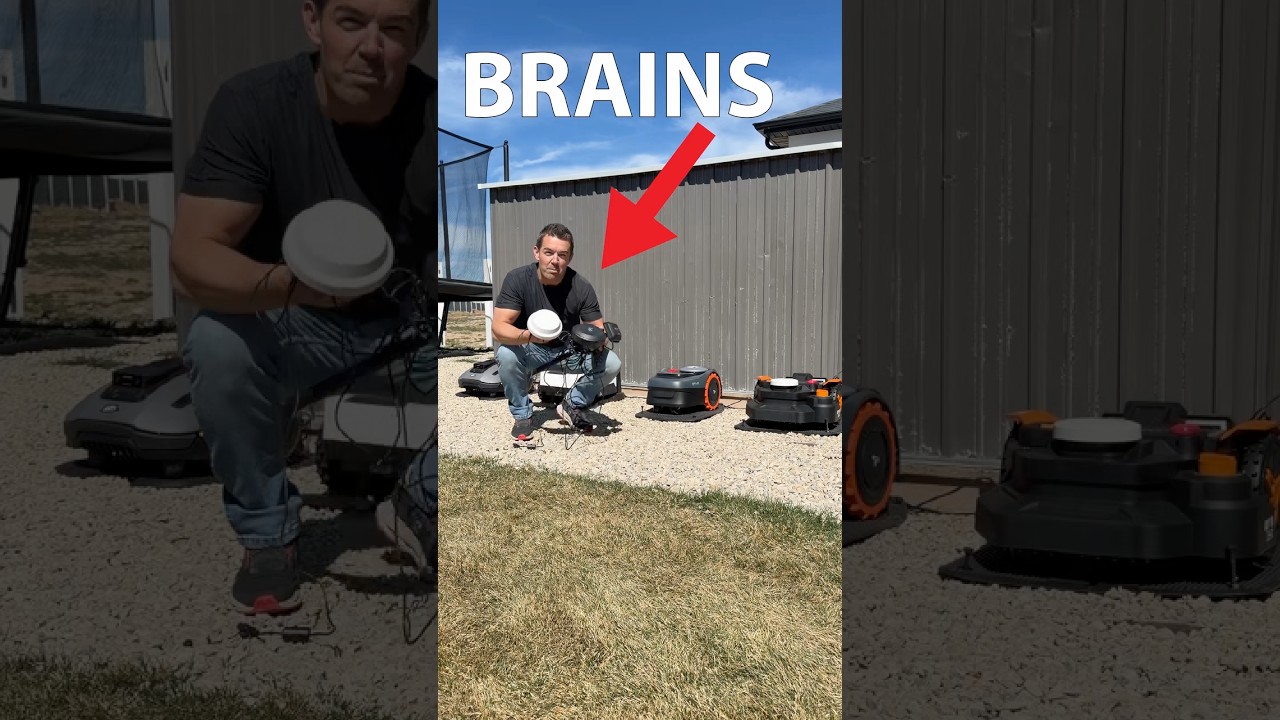
When it comes to the modern era of robot mowers, the navigation systems—the actual brains of the operation that tell the machine where to go—are what dictate your entire mowing experience. In my testing of different RTK systems across various robot mowers, I've noticed a glaring trend. Most of these mowers rely on massive brains mounted on separate, standalone poles planted somewhere in your yard. However, the WORX Cloud Vision takes a completely different approach.
Instead of a detached pole, the brain is mounted right there on the mower itself. This might sound like a simple design tweak, but in my hands-on testing, I found it fundamentally changes how the robot operates. I tested out different RTK systems on robot mowers recently, and this built-in approach is exactly what I would recommend. If you are tired of dealing with external hardware scattered around your lawn, this built-in integration makes the WORX Cloud Vision incredibly notable in a crowded outdoor market.
Real-World Performance
During my real-world testing, the first thing I looked for was signal lag. Let me tell you exactly why that matters. When you have a traditional RTK system mounted on a pole, the further away the mower is from that brain, the longer the signal takes to reach it. It creates a noticeable delay in processing between the stationary unit and the moving robot. With the WORX, the distance to the actual mower's internal system is about an inch. In my tests, this meant absolutely no lag. The communication was instantaneous, leading to far more accurate mapping as the mower navigated my yard.
The second major performance factor I tested was signal interference. Competitor companies typically recommend installing their pole-mounted antennas far away from buildings or obstacles. The basic rule of thumb for those systems is that the better the line of sight to the mower, the better they work. I tested this by watching how the mowers behaved when that crucial line of sight was broken. When those traditional mowers went behind my house or passed behind a car in the driveway, the signal was blocked. It instantly became exceedingly weak, which equaled a confused robot wandering aimlessly or stopping altogether. With the WORX mower, there was simply no way for the signal to get blocked by external yard obstacles in the same manner. Because the brain travels with the mower, it proved to be consistently more accurate and stable throughout my testing routes.
Design & Build Quality
The design of the WORX stands out primarily because of what it does not force you to use: a giant external pole. Most of the robot mowers I test come with cumbersome poles that need to be staked into the ground or mounted securely somewhere on your property. The WORX consolidates its materials by placing the brain directly on the machine's body. From a fit-and-finish standpoint, having the receiver integrated roughly an inch from the main processing board is a massive advantage for the overall build.
Because you don't have to worry about finding an optimal spot away from your house to plant a fragile pole, the overall portability and footprint of the system are drastically reduced. You don't have secondary hardware cluttering up your yard or taking up space. It is a fully self-contained unit. The design choice to integrate the brain directly onto the chassis is a massive win for simplicity, and it inherently protects the navigation tech from being a standalone target for elements or yard debris.
Key Features
The standout feature I demonstrated is, without a doubt, the built-in RTK brain. With a distance of practically zero from the receiver to the mower's internal computer, you get immediate communication. This feature alone eliminates the communication lag that plagues so many other models I've tested on my lawn.
Another massive feature is its inherent resistance to line-of-sight interference. You never have to worry about a car in your driveway or the physical layout of your house breaking the signal to a home base. Finally, the setup process is a massive feature all on its own. Because you aren't running around your yard trying to find the perfect unblocked vantage point to sink a pole, the setup is just substantially easier. You unpack the unit, and the brain is already exactly where it needs to be to get the job done.
Who It's For
I'd highly recommend the WORX Cloud Vision for homeowners who have complex yards with multiple structures, cars, or obstacles that normally disrupt line-of-sight signals. If you want an incredibly easy setup without planting an antenna pole in your yard, this is the robot mower you should look at.
Who Should Skip It
If you are someone who specifically wants a stationary, pole-mounted RTK base station to manage your yard—perhaps because you prefer mapping from a centralized high point—you might want to skip it. Additionally, if you have a perfectly flat, obstacle-free yard and don't mind spending extra time placing a base station away from all buildings, a traditional pole-mower might suffice just fine.
How It Stacks Up
In my testing, I stacked the WORX Cloud Vision up against the standard array of robot mowers that use pole-mounted RTK brains. The difference in navigation consistency was striking. With the standard mowers, I had to be incredibly careful about where I placed the pole to ensure it wasn't blocked. If placed too close to a building or if the external mower went behind a car, the standard mowers became deeply confused due to weak signals. The WORX bypassed the line-of-sight requirement between a base station and the unit entirely. It simply out-communicated the competition because its brain is built right in, allowing for a far more stable mapping experience across the board.
Final Verdict
Ultimately, after testing out different RTK systems, the built-in approach on the WORX Cloud Vision is absolutely what I recommend. Getting rid of the stationary pole means you eliminate lag, prevent signal blocking from houses and cars, and secure a much more stable, accurate mapping experience. The simple fact that the setup process is just remarkably easier makes this an easy win.
How does the WORX Cloud Vision navigate my yard?
It uses a built-in RTK system, or brain, that is mounted directly on the mower rather than heavily relying on a separate pole.
Do robot mowers lose signal behind houses or cars?
Traditional pole-mounted mowers can suffer weak signals and become confused when their line of sight is blocked by a house or car. The WORX system prevents this by keeping the brain on the mower.
Is the WORX Cloud Vision mower easy to set up?
Yes, in my testing, the setup is much easier because you don't have to find an optimal spot away from buildings to mount a separate antenna pole.
Does the WORX Cloud Vision have lag when mapping?
No. Because the brain is mounted about an inch from the mower's core system, there is virtually no lag, which results in better communication and more accurate mapping.
Where should I install a robot mower antenna pole?
For most traditional systems, companies recommend installing the pole away from buildings to maintain the best line of sight to the mower, though the WORX system does not require you to do this.