
VMAX VX2 Hub
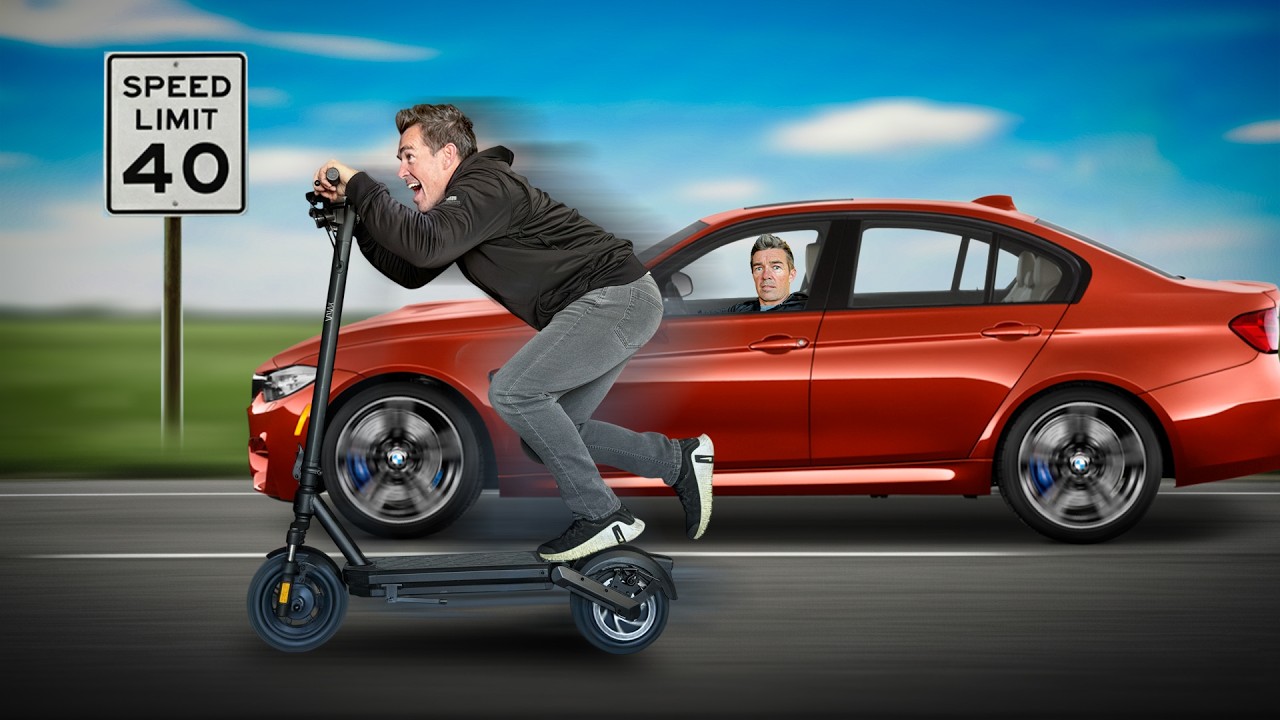
I tested the VMAX VX2 Hub, a single-motor electric scooter that blew my mind by hitting 35 mph and effortlessly climbing steep hills for under $1,500.
- Topped out at 35 mph during my speed tests, which is insanely fast for a single-motor scooter.
- Easily climbed a steep 20% grade hill with loose gravel and soft dirt.
- Handled downhill runs at 36 mph with zero stem wobble thanks to the internal steering dampening.
- Delivered 15 miles of hard riding with over 1,000 feet of elevation gain and still had 32% battery left.
- At just 55 pounds, it has an incredible power-to-weight ratio that makes it easy to pop up curbs.
- Took a surprisingly long time to brake from high speeds due to the smooth street tires.
- The folding mechanism lever got physically stuck during my testing, though this may have been a fluke.
- The companion app is too basic and the turn-by-turn navigation feature repeatedly crashed on me.
- Motor
- 500 W
- Peak Power
- 1,900 watts
- Battery
- 18.2 amp hour
- Range
- 44 miles (base), 56 miles (large battery)
- Top Speed
- 35 mph
- Weight
- 55 lb
- Weight Limit
- 287 lb
- Brakes
- Drum brake in the front and a disc in the rear
- Suspension
- Front hydraulic fork with rear elastomer
- Water Rating
- IPX6
- Warranty
- Two-year warranty
VMAX VX2 Hub
Amazon · Check current price · As an affiliate we may earn from qualifying purchases.
Overview
VMAX has designed an incredibly powerful single-motor scooter that completely caught me off guard. This is the VMAX VX2 Hub, a scooter that starts at $1,200 and manages to deliver performance metrics I typically only see on heavy, expensive dual-motor setups. I wanted to see exactly how much power this machine was hiding, what VMAX is doing differently than the competition, and whether it truly stands as a great value for the price.
What makes this model notable right out of the gate is the proprietary motor. VMAX designs their own motors, and they call this one the V-Torque R10 Hub. It features a base output of 500 W, but this motor peaks out at a massive 1,900 watts. To put that into perspective, most rideshare scooters you see on the street are hitting about 800 to 1,000 watts. Having up to 900 more watts of power on tap in a relatively compact frame is a serious statement.
Real-World Performance
To see how that power translates to the pavement, I took it out for a top-speed test. I started in Eco mode, fully expecting a tame ride. Instead, the speedometer climbed to 32 mph and settled around 33 mph. I have never seen a scooter hit 33 mph on a standard Eco mode. When I bumped it up to Sport mode, I managed to hit 35 mph for a split second before it held steady. Going 35 mph is just stupid fast for a single-motor scooter. I have tested a lot of scooters in this price range, and I don't think I have ever gotten over 31 mph with just one motor.
Since the road I tested on was slightly downhill, I turned around and headed straight back up it to get a true feel for its sustained power. The scooter held incredibly strong, maintaining about 33.5 mph uphill. When I cross-referenced the scooter screen with my GPS speed app, the app showed about 2 mph less, which means I was still doing 31.5 mph uphill. Both of those runs were done with Boost mode activated. You can toggle this mode by tapping the power button five times. When I tested Eco and Sport modes with Boost turned off, my speed safely topped out around 21.8 mph. I love having this option because, with Boost on, this machine is deceivingly zippy and aggressively wants to jump off the line.
That low-end torque is so strong that VMAX is the only brand I know of where you can pop a wheelie with just one motor. If you are not leaning forward, you can easily pull the front wheel up. To finish off my power testing, I took it to a short but very steep hill covered in soft dirt and gravel. It sits at roughly a 20% grade, though VMAX claims the scooter can climb up to a 35% grade. The VX2 Hub climbed my test hill with ease, proving it has serious torque for off-road inclines.
Finally, I had to test the battery efficiency. I rode the upgraded 18.2 amp hour version, which costs $1,400. After a quick three-hour charge, I took it out and went full throttle for over 15 miles, climbing over 1,000 feet of elevation. I averaged about 30 mph the entire time. When I got back to my house, the battery life still showed 32%. That is simply incredible range for a scooter being pushed that hard.
Design & Build Quality
One of my favorite things about the VX2 Hub is the engineering tweaks VMAX made behind the scenes. First and foremost, they took the governor off the motor. When I was bombing down a hill hitting 36 mph full throttle, it felt like the power was still coming on. There is absolutely zero drag from the motor. They also added a tiny bit of boost in the throttle when you release it. It is just enough power to make the transition from accelerating to coasting feel incredibly smooth.
VMAX also added some internal steering dampening, which means the steering column is tightened up for high-speed stability. Coming down a hill at 36 mph, the ride was incredibly smooth, and I experienced zero stem wobble. Usually, only much larger, heavier scooters offer this kind of balance. The VX2 Hub manages to feel like a heavyweight cruiser while only weighing 55 lb. This power-to-weight ratio is fantastic, allowing you to easily hop curbs and rally it around tight corners.
For suspension, you get a front hydraulic fork paired with a rear elastomer setup. I took it off the pavement and onto a dirt trail, and going 16 mph, it felt soft and comfortable over rocky sections. However, the suspension does have its limits. When I rode off a curb slowly, I bottomed out. When I popped off the curb at higher speeds, it bottomed out pretty badly. The street tires, on the other hand, are high quality. They soaked up sidewalk cracks perfectly at 15 mph without rattling my eyeballs—a huge plus for daily commuting.
My main criticism regarding the build quality comes down to the braking and the folding mechanism. The scooter uses a drum brake in the front and a disc in the rear. I generally like this combo, but because this scooter goes so fast and utilizes relatively smooth street tires, it took a very long time to come to a complete stop from top speed. Additionally, the small folding lever piece got physically stuck during my testing. I have reviewed a lot of VMAX scooters and never had a folding issue before, so this might just be a fluke on my specific unit, but it is worth mentioning.
Key Features
Beyond the sheer power, the VX2 Hub packs a lot of quality-of-life features. It features automatic headlights that turn on as soon as the sun goes down, which is surprisingly rare on scooters. VMAX also included integrated turn signals on the handlebars and the rear fender. The turn signal switch on the bars is a little bit hard to push, but the signals are bright and they display nicely on the main screen.
The scooter connects to a companion smartphone app, but this was a major letdown. VMAX advertises a turn-by-turn navigation feature inside the app, but I tried to use it twice, and it kicked me out of the application both times. Overall, the app is extremely basic. You can use it to turn on the headlight, toggle zero-start, and change speed modes, but that is about it. It just does not feel as premium as the hardware itself.
Other notable features include a seamless cruise control system. There is no audible beep when cruise control engages, but a clear indicator light pops up on the dash. The scooter also boasts an IPX6 water resistance rating, a maximum rider weight limit of 287 lb, and a solid two-year warranty backed by US-based customer service and a vast supply of spare parts.
Who It's For
I highly recommend the VMAX VX2 Hub to riders who want the speed, hill-climbing power, and range of a heavy dual-motor scooter, but in a much lighter, more nimble package. If you have a hilly commute or just love riding fast without lugging around an 80-pound machine, this scooter delivers an unbeatable power-to-weight ratio.
Who Should Skip It
If you are someone who frequently rides in heavy traffic and needs instant, ultra-responsive braking from top speeds, you should look elsewhere. The smooth tires and current brake setup require a long stopping distance. You should also skip this if you rely heavily on companion apps for dashboard navigation, as the software is currently too buggy.
How It Stacks Up
When you look at the electric scooter market in the $1,400 to $1,500 price range, you will find a lot of dual-motor options. The problem with those competitors is that a significant chunk of your money is paying for that second motor, which usually means they have to compromise on battery size. VMAX took a different route. By using one highly efficient motor that is almost as powerful as two, they freed up the budget to include a massive battery inside a smaller frame. Their custom controller makes the battery and motor relationship incredibly efficient, which is why this scooter can go exceptionally fast and maintain long range simultaneously.
Final Verdict
The VMAX VX2 Hub completely redefines what a single-motor scooter can do. I just cannot get over the fact that a $1,200 scooter with one motor can hit 35 mph and fly up steep dirt hills without breaking a sweat. From the automatic headlights to the removed motor governor, VMAX has added the little details that make a company stand out. Despite a few quirks with the brakes and the mobile app, this is a phenomenal value for anyone looking for serious speed and range in a lightweight package.
How fast does the VMAX VX2 Hub go?
I hit up to 35 mph in Sport mode during my speed tests, which is exceptionally fast for a single-motor scooter.
How far can the VMAX VX2 Hub go on a single charge?
The smaller battery version has a 44-mile claimed range, while the larger 18.2 amp hour battery model I tested claims 56 miles. In my real-world test, I rode 15 miles full-throttle with heavy elevation gain and still had 32% battery left.
Is the VMAX VX2 Hub good on hills?
Yes, the company claims it handles a 35% grade. I took it up a steep 20% dirt and gravel hill, and it climbed with ease.
Does the VMAX VX2 Hub have suspension?
It features a front hydraulic fork and rear elastomer suspension. It handled dirt roads comfortably, though I did bottom out when jumping off curbs.
How heavy is the VMAX VX2 Hub?
It weighs 55 lb, making it surprisingly lightweight given its impressive power and large battery size.